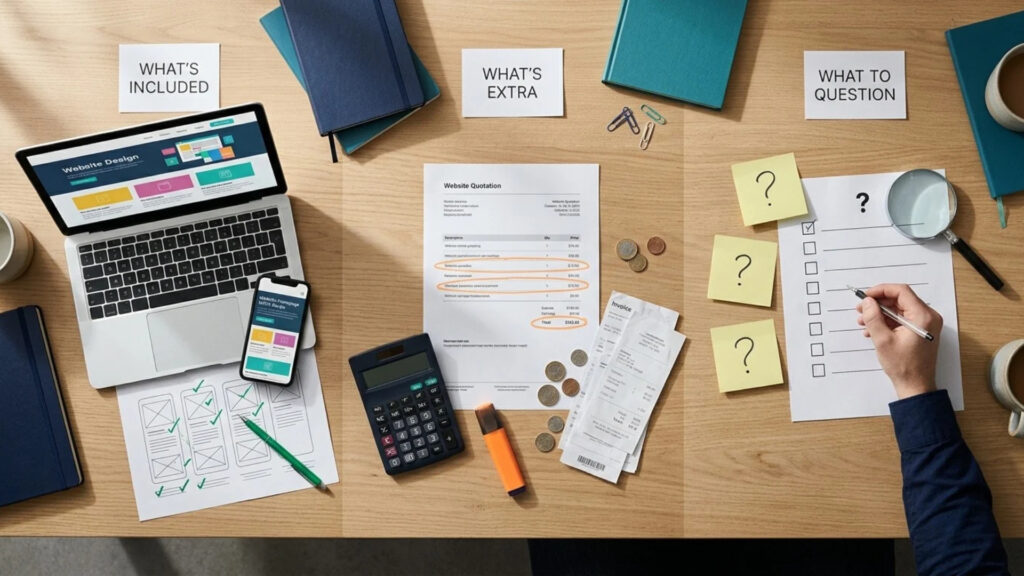

Picture a small business that launches its first website over a weekend. It picks a template, adds its logo and brand colours, writes a few pages and goes live. For the first year, the site does exactly what it needs to.
Then the business grows. It wants online booking that syncs with staff calendars, enquiry forms that feed straight into its CRM, and service pages that don’t look identical to the competitor down the road who bought the same theme. Before long, every change means another plugin, another workaround, or a developer saying, “the template doesn’t really do that.”
That’s usually when owners start looking into custom web development services. But a template isn’t automatically a bad choice, and a custom build isn’t automatically the right one. The real question is which approach fits what your business needs today and what it’s likely to need over the next few years.
This guide compares both options honestly: cost, flexibility, performance, maintenance and growth. That way you can make the decision based on your requirements rather than on a sales pitch.
What Is a Template-Based Website?
A template (often called a theme) is a pre-designed website layout. The page structures, styling, navigation and common components such as headers, galleries and contact forms are already built. Your job is to swap in your own content, images, colours and fonts.
Template websites usually come in two forms:
- Hosted website builders, where hosting, design tools and templates come together under a monthly subscription.
- Content management systems (CMS) such as WordPress, where you install a ready-made theme and extend it with plugins.
Templates are popular for good reason. They’re quicker to launch, cost less upfront and are usually easy for non-technical staff to update. The best ones are built by experienced developers, tested across devices and supported by large user communities.
Quality varies widely, though. A well-coded template from a reputable developer can be a solid foundation. A bloated, poorly maintained one can cause problems from day one. If you’re leaning towards WordPress in particular, our upcoming guide to WordPress development for business websites will look at where it saves money and where it can become harder to manage.
What Is Custom Web Development?
Custom web development means the website is designed and built around your business rather than adapted from a generic layout. The structure, page designs, user journeys and functionality all start from your goals, your customers and the way you operate.
In practice, a custom website might include:
- Page layouts designed around your content and the actions you want visitors to take.
- Features built for your processes, such as a tailored quote calculator, customer portal or booking flow.
- Integrations with tools you already use, such as a CRM, stock system or accounting software.
- A design system unique to your brand rather than shared with thousands of other sites.
Custom doesn’t have to mean coding every element from scratch. Many custom websites run on established platforms like WordPress, with a bespoke theme built specifically for the business. Others use proven frameworks and reusable components. What matters is the starting point. A template starts with a design and fits your business into it. Custom development starts with your business and builds the design and functionality around it.
That approach usually involves more stages: discovery, planning, design, development and testing. It takes longer than launching a template, and how long custom website development takes depends heavily on complexity and how well the project is planned. We’ll also be walking through the website development process from brief to launch in a future article.
Custom Website vs Template Website: What’s the Difference?
Here’s how the two approaches typically compare. These are general tendencies, not fixed rules.
| Factor | Template website | Custom-built website |
|---|---|---|
| Initial cost | Lower. Most design and build work already exists. | Higher. Design and development are done for your business specifically. |
| Development time | Faster. Can launch in days or weeks. | Longer. Planning, design and testing take more time. |
| Design flexibility | Limited to what the template’s structure allows. | Designed around your brand and content. |
| Functionality | Relies on built-in features and plugins or apps. | Features can be built to match your processes. |
| Scalability | Fine for modest growth; can become restrictive with complex needs. | Can be planned with future features in mind. |
| Performance | Varies. Depends on template quality, plugins and hosting. | Varies. Depends on build quality, hosting and content. |
| Maintenance | Template and plugin updates; some managed by the platform. | Updates, security and support from a developer or agency. |
| Integrations | Limited to available plugins, apps or connectors. | Can connect to most systems that offer an API. |
| User experience | Standardised journeys that suit common use cases. | Journeys designed around your specific customers. |
| Platform control | Hosted builders can limit moving the site elsewhere. | Usually more control, depending on your contract. |
| Best suited to | New, small or simple websites with standard needs. | Growing businesses with specific functionality or integration needs. |
Performance and SEO: What Really Affects Results
Two rows deserve a closer look: performance and SEO.
It’s often claimed that custom websites are always faster and rank better. That isn’t guaranteed. A lean, well-built template on good hosting can outperform a poorly coded custom site. Search engines don’t reward a website for being custom. They reward fast loading, clear structure, mobile usability, relevant content and a good experience for visitors. Custom development gives you more control over those factors, but that control only helps if the build is done well.
Whichever route you take, get clear on the website development scope before comparing quotes. Two “custom” quotes can describe very different amounts of work.
Limitations of Template Websites as Your Business Grows
Not every template site runs into these issues. Many businesses use templates successfully for years. Whether these limits matter depends on your platform, the template’s quality, how it was set up and what you actually need. These are the problems that tend to appear as requirements grow.
1. Limited Design Flexibility
Templates come with fixed layout logic. You can change colours, fonts and images, but moving beyond the intended structure is often difficult. Something as simple as a different service page layout or a new way of presenting case studies can turn into a battle with the theme.
2. Functionality Limitations
When you need a feature the template doesn’t support, the usual answer is a plugin or third-party app. That works well for common needs. For anything specific to your business, such as a multi-step quote builder with custom pricing rules, the available options may only get you part of the way there.
3. Difficulty Supporting Complex User Journeys
A simple brochure site has a simple journey: read, then contact. As a business grows, it may serve different audiences, such as trade and retail customers, or offer services that need different routes to enquiry. Templates are designed for typical journeys, and shaping them around more complex ones isn’t always practical.
4. Dependence on Plugins and Third-Party Tools
Plugins are useful, but each one adds something to manage. Updates can occasionally conflict with each other or with the theme. Premium plugins often carry ongoing licence fees. Too many add-ons can also slow a site down. None of this is a reason to avoid plugins, but a site built from a dozen of them needs careful upkeep.
5. Scalability Challenges
A template chosen for a five-page site may not suit a business that later needs hundreds of products, multiple locations or a members’ area. Adapting the existing setup can get harder with each addition, and the site becomes increasingly patched together.
6. Brand Differentiation
Popular templates are, by definition, used by many businesses. Visitors may not recognise the exact theme, but they often notice when a site feels generic. In a competitive market, where your website is often the first impression, standing out can matter.
7. Long-Term Limitations and Rebuilding Costs
The biggest hidden cost of a template that no longer fits is the rebuild. If the site can’t adapt, you may eventually need to start again, migrating content and protecting search rankings along the way. Knowing when your existing website needs a redesign, rather than another workaround, can save a lot of wasted spend.
Is Custom Web Development Worth the Higher Investment?
It can be, but only when the website plays a significant role in how your business wins customers, serves them or runs day to day.
Custom development tends to deliver the most value in these areas:
- Business-specific functionality. Features are built to match how you work, rather than bending your processes to fit a plugin.
- Control over user journeys. You decide how visitors move from first visit to enquiry or purchase, and you can refine it based on real data.
- A distinctive brand experience. The design reflects your business, not a layout shared with others.
- Integration. Connecting your website to the systems behind it can reduce manual admin and errors.
- Future development. A well-planned custom build can be extended as needs change, rather than replaced.
Look at the Total Cost of Ownership
When weighing the investment, look at total cost of ownership, not just the launch price. A template may cost less on day one, but add up subscriptions, premium plugin licences, paid add-ons and the staff time spent on workarounds over three to five years. A custom website costs more upfront and still needs maintenance, but may avoid some of those ongoing costs and a premature rebuild. The answer will differ for each business, so run the numbers for your own situation.
Ownership and Maintenance Still Matter
Two further points are often overlooked.
Ownership. With some hosted builders, you can’t easily move your site to another provider. With a custom or self-hosted build, check your contract to confirm who owns the code, design files and hosting accounts.
Maintenance. Custom websites aren’t “set and forget”. They need updates, security monitoring, backups and occasional fixes. Working with one development partner for both the build and ongoing support usually makes this simpler than splitting responsibility across several providers.
It’s also worth remembering that even an excellent website won’t generate enquiries on its own. Its value depends on people finding it, which is why your website should sit within a wider marketing strategy covering search, paid ads and other channels.
No website approach can guarantee a return. The sensible way to judge value is to ask whether a custom build solves specific problems that a template can’t, and whether solving them matters enough to your business to justify the cost.
When a Template Website Is the Smarter Choice
For many businesses, a template is the right decision, not a compromise. It often makes sense if you are:
- A new startup with a limited budget that needs to get online quickly.
- Testing a business idea before committing to a larger investment.
- Running a brochure website with a handful of pages and a contact form.
- Working with straightforward content that rarely changes structure.
- Needing a professional presence fast, for example ahead of a launch or event.
A well-built template site can perform effectively when it matches your needs. The key is choosing a reputable, well-supported template, keeping plugins to a minimum, investing in good hosting and writing clear content. Avoiding common business website development mistakes, such as slow pages, unclear calls to action or cluttered layouts, will usually matter more than whether the site is custom or templated.
If you’re unsure, starting with a template and moving to a custom build later is a perfectly reasonable path. Just go in knowing that a future rebuild may be part of the plan.
When Your Business Should Consider Custom Web Development
Custom web development services become worth exploring when your requirements move beyond what standard tools comfortably support. Common triggers include:
- Unique functionality. You need features that no plugin or app does properly.
- Complex integrations. Your website needs to exchange data with a CRM, booking platform, ERP or other systems.
- Specific customer journeys. Different audiences need different paths, content or account areas.
- Growing operational demands. The website is increasingly part of how you deliver your service, not just how you advertise it.
- E-commerce beyond standard setups. Custom pricing, B2B ordering, product configurators or unusual fulfilment rules often call for custom e-commerce website development.
- Conversion-critical processes. If most of your revenue starts with an online enquiry or purchase, small improvements to that process can matter.
- Platform limits. You keep hearing “that’s not possible on this platform.”
- Long-term scalability. You expect significant growth in content, products, users or locations.
Some warning signs suggest your current site is no longer coping: workarounds are piling up, simple changes need a developer, plugins keep conflicting, or your team is manually copying data between the website and other systems.
How to Decide Between Custom Development and a Template
Rather than starting with “custom or template?”, start with your requirements. Defining your website requirements properly before you speak to developers makes every quote easier to compare and every recommendation easier to judge.
Questions to Ask Before You Choose
Work through these questions with your team:
- What must the website do? List the essential features, not the nice-to-haves.
- Can existing tools handle those features well? Check whether templates, plugins or apps genuinely cover them without heavy workarounds.
- What’s your realistic budget? Include ongoing costs such as hosting, licences and maintenance, not just the build.
- How soon do you need to launch? A firm deadline may favour a template, at least initially.
- Where will the business be in two to three years? Consider new services, locations, products or audiences.
- Which systems must the website connect to? Integrations are often the deciding factor.
- Who will maintain the site? Decide whether you have in-house skills or need ongoing support.
- How important is the user experience to sales? The more your revenue depends on the website, the more control over the journey matters.
- How much does standing out matter in your market? In crowded sectors, a generic look can cost you credibility.
If most of your answers point to standard needs, a modest budget and a quick launch, a template is likely the better fit. If several answers involve specific functionality, integrations or significant growth, custom development deserves a serious look.
There’s also a middle ground. Many businesses choose a quality CMS with a bespoke theme, or a template extended with a small number of custom features. This can balance cost and flexibility well.
Who builds the site matters as much as how it’s built. The skills and support you need may also shape your decision, and choosing between a freelance website developer and an agency is a related question worth thinking through.
Custom Web Development Services at DigitSea
DigitSea is a digital marketing agency based in Glasgow, working with businesses across the UK, from startups launching their first website to established brands rebuilding for growth.
Our custom web development solutions cover custom website development, WordPress development, e-commerce solutions, UI/UX design and development, responsive web design, speed and performance optimisation, and ongoing website maintenance and support.
Every project starts with strategy. We research your customers, goals and market before development begins, so the recommendation fits your business rather than a preferred technology. Because our developers, designers and marketers work as one team, websites are planned alongside our digital marketing services, including SEO and paid advertising, rather than in isolation.
We’ll also give you straight advice. When a simpler, more affordable website will do the job, we’ll tell you. Should your requirements genuinely call for a custom build, we’ll explain why in plain English, with clear timelines and transparent pricing.
If you’re comparing agencies, our upcoming guide to choosing the right professional website development company in Glasgow will help you know what to look for.
Not sure whether a template or a custom website is right for you? Get in touch with DigitSea for a free, no-obligation conversation about your requirements.
Final Thoughts
Template websites are quicker, cheaper upfront and perfectly suited to many small businesses, startups and simple brochure sites. Custom-built websites cost more and take longer, but offer greater control over design, functionality, integrations and growth.
Neither option is better in every case. The right choice depends on what your website needs to do, your budget, your timescales, your growth plans and how central the website is to your revenue. A cheap website only holds your business back when it stops matching what your business needs.
If you’d like an honest view on which approach suits your goals, talk to the DigitSea team about your website requirements. We’ll help you choose the option that makes sense now and leaves room for where you’re heading.