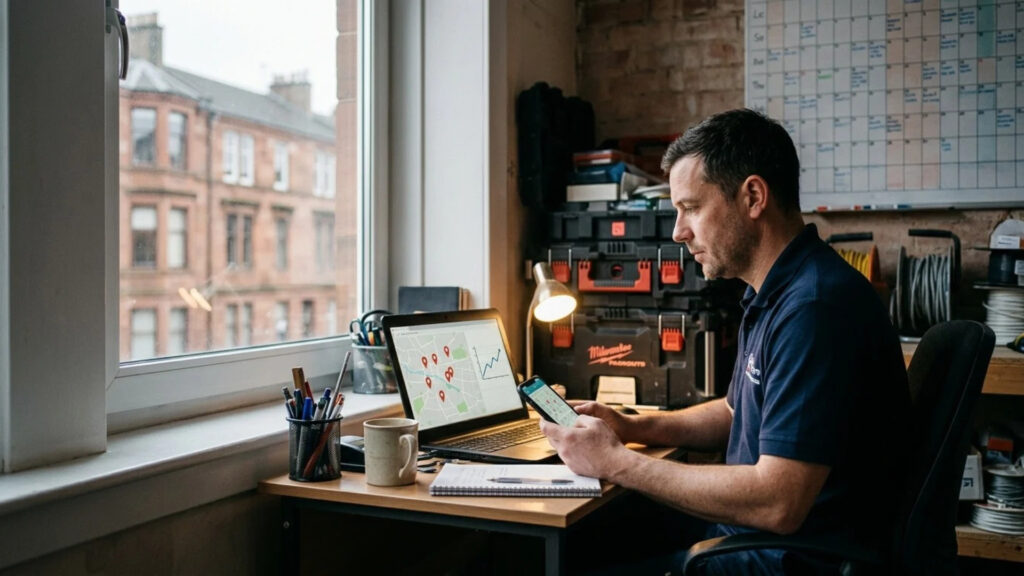

Most small business owners do not have spare hours for their website. Between quotes, customers and suppliers, it often gets attention only when the phone goes quiet, yet it is usually where new customers decide whether to get in touch.
You do not need more traffic for its own sake. You need more of the right visitors: people searching for the services, products or answers you actually provide. The search engine optimization tips for small business owners in this guide focus on exactly that. They set out which improvements matter most, in what order, and how to tell whether they are working. There are no shortcuts or guaranteed rankings here, just practical steps that build relevant organic search traffic over time.
Why Does Organic Traffic Matter for Small Businesses?
Organic search traffic comes from Google’s unpaid results, and search engine optimization is how you earn a place in them. It matters because it reaches people at the moment they are looking. Someone searching for a service is often comparing providers, checking prices or researching before they decide. If your pages answer their questions clearly, you become part of that decision.
Traffic and qualified traffic are not the same thing. A blog post that attracts thousands of visitors from another country, or people looking for something you do not sell, can make your analytics look busy while producing no work. A service page visited by forty local people who need what you offer may generate more enquiries than that post ever will. Good small business SEO aims for a steady flow of visitors who could realistically become customers, not the biggest possible number.
12 Practical SEO Tips for Small Businesses
These SEO tips for small business websites are ordered roughly by how directly they affect enquiries. For a broader checklist of ranking factors, our guide to practical SEO tips is a useful companion.
1. Target Keywords That Match Your Products and Services
Keyword research should start with what you sell, not with a tool. List the services that bring in your most profitable work, then note how customers describe them when they call or email.
Take a small removals firm in Glasgow. Ranking for “removals” is unrealistic and would attract people from across the UK. Phrases such as “office removals Glasgow” or “piano movers Glasgow” have fewer searches, but the people using them need exactly that service. Words like “quote”, “cost”, “near me” or a place name often signal someone close to deciding. Search Console, Google autocomplete and Keyword Planner help you check which variations people actually use.
2. Improve the Pages Most Likely to Generate Enquiries
Service pages, product pages and your contact page do most of the commercial work, so improve them before anything else. Ask whether a stranger would understand, within seconds, what you offer, who it is for and how to get in touch.
Strong enquiry pages describe the service in plain language, use headings that reflect how people search, answer common questions about price, process and timescales, and show a clear call to action near the top. These pages often have some history with Google already, so improving them can be more practical than publishing new articles that start from nothing.
3. Match Each Page to a Clear Search Intent
Informational searches want an answer, such as “how to pack books for a house move”. Commercial searches compare options, such as “best removal companies in Glasgow”. Transactional searches are ready to act, such as “book a man and van Glasgow”.
Give each page one main purpose. Problems start when a page tries to be a guide, a price list and a sales page at once, or when two pages chase the same search. Look at what Google already ranks for your target phrase. If the results are mostly guides, a sales page will struggle, and the reverse is also true.
4. Create Helpful Articles Around Customer Questions
The questions customers ask before buying make some of the best topics. A removals firm is regularly asked whether insurance is included or how long a typical house move takes. Each answer can become a short guide or a clear FAQ.
Group these articles around the service they support. This topic cluster approach gives visitors a natural route from a question to a service, and shows search engines which subjects your site covers in depth. Publish because a topic helps your audience, not to meet a quota. If you are still planning your overall small business SEO strategy, our guide to SEO for small businesses explains what to put in place first.
5. Strengthen Internal Links Between Related Pages
Internal links guide visitors to related pages and help search engines understand how your content fits together. A useful habit is linking from pages that already attract visitors, often popular guides, to the pages that turn visitors into enquiries.
An article on packing fragile items, for example, could link to the firm’s packing service page. Use anchor text that describes the destination rather than “click here”. The Links report in Search Console shows which pages receive the most internal links, and it often reveals that key service pages receive surprisingly few. Our guide to SEO best practices explains how internal linking fits alongside the other foundations every website needs.
6. Optimize Titles, Headings and Page Content
Your title tag is often the first thing a searcher reads, so state clearly what the page offers and, where relevant, where. “Office Removals in Glasgow | Evening and Weekend Moves” gives a far better reason to click than “Services”. Headings should lead readers through the page logically, and your main keyword should appear where it reads naturally, typically in the title, main heading and opening paragraph.
Meta descriptions are not a direct ranking factor, but they can communicate relevance and encourage the right people to click. These on-page SEO basics make each page clearer to visitors and search engines alike. Avoid repeating the same phrase throughout a page, as keyword stuffing makes content harder to read and does not help it rank.
7. Make Your Website Easier to Crawl and Index
A page cannot bring in search traffic if Google cannot find or index it. Start your technical SEO checks with the Page indexing report in Search Console to see which pages are excluded and why. Then confirm that your XML sitemap lists the pages you want found, that important pages carry no stray noindex tag, that robots.txt is not blocking key sections and that internal links do not lead to broken pages.
Verify a problem before changing anything. The URL Inspection tool shows how Google sees a specific page, and an unfamiliar setting changed in a hurry can cause more harm than the original issue. If in doubt, ask your web developer first.
8. Improve Mobile Usability and Page Performance
Test your key pages on an ordinary phone, not just a desktop. Text should be readable without zooming, buttons easy to tap and your phone number visible without hunting.
Slow pages usually come down to oversized images, too many plugins or scripts from tools you no longer use. Compress images, remove what you do not need and check the Core Web Vitals report in Search Console, which reflects real visitor experience. Use it to find problems rather than chase a score. A perfect result will not guarantee higher rankings, but a frustrating page will lose visitors you worked hard to attract.
9. Refresh Content That No Longer Meets Search Intent
Pages that once performed well can gradually lose visibility as information dates and competitors publish better answers. In Search Console, compare recent months with the same period a year earlier to find pages with falling clicks.
For each one, look at what now ranks above it and ask what your page is missing. Correct outdated details, rewrite weak sections and answer questions people now ask, giving the page a fair chance to appear higher in Google search again. If two older posts cover nearly the same topic, merge them and redirect the weaker URL. Changing the date without improving the content helps nobody.
10. Earn Relevant Backlinks and Build Credibility
Links from relevant websites still help search engines judge credibility. For small businesses, the best ones usually come from real activity: suppliers and partners who list you, trade associations, local organizations you support, and writers who reference a useful resource. Our removals firm might publish a clear moving day checklist that letting agents happily share with tenants.
Avoid backlink packages promising hundreds of links for a small fee, link exchange schemes and mass directory submissions. These tactics go against Google’s spam policies, rarely last and can leave a cleanup job that costs more than the links did.
11. Use Local SEO When You Serve Specific Areas
If customers come from particular towns or neighbourhoods, local signals can bring some of your most valuable traffic. That means pages that genuinely reflect the areas you serve, consistent business details across the web and, for eligible businesses, an accurate Google Business Profile.
Our guide to local search engine optimization explains how local search works and how to plan your approach. For specific actions, see our local SEO best practices. Local business SEO works best on top of a sound website, so the other tips here still apply.
12. Measure Results and Prioritize Improvements
Google Search Console shows the searches your pages appear for, with impressions, clicks and average position. Google Analytics shows what visitors do next, including form submissions, calls and bookings, provided those actions are set up as key events.
Look for patterns rather than daily changes. A page with good traffic but no enquiries may need a stronger call to action or clearer pricing information. Keep a simple log of what you change and when, so you can connect results to actions. Evidence should decide your next step, not guesswork or constant tinkering.
Which SEO Tasks Should a Small Business Do First?
When time is limited, order matters. For most small businesses, a sensible sequence is:
- Review your most important service and product pages.
- Check indexing and major technical issues.
- Improve keyword targeting and page content.
- Add relevant internal links.
- Publish useful supporting content.
- Monitor results and make adjustments.
Enquiry pages sit closest to revenue, technical problems can cancel out other work, and supporting content performs best once there are strong pages for it to point to. Your order may differ. A site with a serious indexing problem should fix that first, while a business in a crowded market may need more content and links than one with few competitors.
Budget shapes priorities too. A few changes done properly usually achieve more than effort spread thinly. If you are weighing outside help, our guide to affordable SEO services in the UK for small businesses explains what to look for when every pound counts.
How Long Does Small Business SEO Take to Improve Traffic?
There is no fixed timeline. Results depend on competition, your site’s history and technical condition, content quality and the changes you actually make.
It helps to separate two stages. Making improvements is within your control: a rewritten service page or a fixed indexing error might take an afternoon. Seeing measurable results takes longer, because Google needs to recrawl pages, reassess them against competitors and show them to enough searchers for a trend to appear. Small fixes can show an effect within weeks, while competitive terms often take months. Be wary of anyone who promises a fixed traffic increase or claims they can get your website to the top of Google by a set date.
When Should a Small Business Consider Professional SEO Support?
Many owners handle the basics themselves. Professional support becomes worthwhile when technical problems keep returning, when you compete with larger firms for the same keywords, when nobody has time to keep SEO moving, or when visits rarely turn into enquiries.
Digitsea is a digital marketing agency based in Glasgow that works with small businesses across the UK. Our SEO support for small businesses starts with understanding where your site stands, then focuses on the changes most likely to bring relevant traffic. Whether you choose an SEO consultant in Glasgow for a single review or an SEO company in Glasgow for ongoing work, look for clear reporting and realistic expectations.
Frequently Asked Questions
What are the best SEO tips for small businesses?
The most useful search engine optimization tips for small business websites are the basics done well: target keywords that match what you sell, improve your enquiry pages, make sure Google can index them and measure the results.
How can a small business get more organic traffic?
Make key pages clearly relevant to the searches customers use, publish useful answers to their questions and link those answers to your service pages. Then use Search Console to see which pages are gaining or losing visibility.
Can small businesses do SEO without an agency?
Yes. Most small business SEO tips need time and care rather than specialist tools. Outside help becomes useful when technical problems, strong competition or lack of time hold progress back.
Which pages should a small business optimize first?
Start with the pages closest to an enquiry: your main service or product pages, homepage and contact page. Supporting articles come once those are in good shape.
How often should small business websites publish content?
There is no ideal frequency. One useful article a month that answers a real customer question is worth more than weekly posts written to fill a schedule, and improving existing pages counts as progress too.
Does local SEO help increase website traffic?
For businesses serving specific areas, usually yes. It can bring more visits from nearby people ready to buy, plus calls and direction requests straight from your Business Profile. If that describes you, it is worth taking steps to improve your local SEO.
How can I measure whether my SEO strategy is working?
Track impressions and clicks for important pages in Search Console, and enquiries from organic visitors in Google Analytics. Judge progress over several months, focusing on qualified enquiries rather than total visits.
Conclusion
More website traffic from Google is only valuable when it comes from people who need what you offer. Small businesses that make steady progress tend to do a few things well: target keywords that reflect their real services, build pages that answer customer questions, keep the site easy to crawl, connect related pages with internal links and measure results consistently.
You do not need to act on every tip at once. Choose the two or three improvements that address your website’s biggest weakness, complete them properly and check the effect before moving on. If you would like an experienced view of where to start, our professional SEO services in Glasgow can help you identify the changes most likely to bring in relevant traffic.